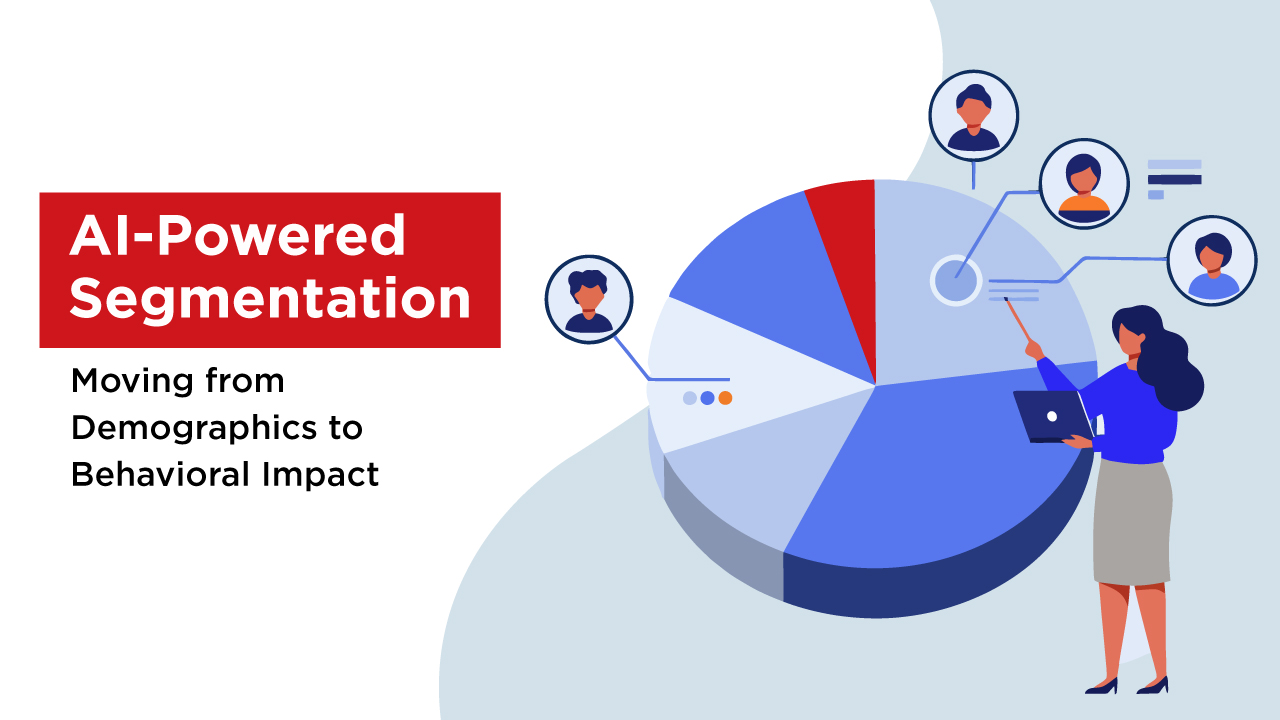
Digital marketing relies on segmentation, enabling marketers to target customers based on factors such as location, interests, and purchase history. AI-powered segmentation uses artificial intelligence and machine learning to help companies group customers into clusters that shift as their needs and behaviors change. This leads to more personalized and relevant interactions.
Traditional segmentation relies on broad categories, which limits how well brands can understand their audiences. In contrast, AI-based segmentation analyzes large amounts of data to find individual preferences and patterns that change over time.
What is AI-powered Segmentation?
AI-powered segmentation is a data-driven marketing approach that uses artificial intelligence to analyze customer behavior, interactions, and preferences to create highly targeted audience segments. Unlike traditional demographic-based segmentation, AI segmentation evaluates real-time behavioral signals, including browsing patterns, purchase history, engagement levels, and intent.
Businesses use AI-powered segmentation to improve personalization, optimize marketing campaigns, and deliver relevant experiences across channels.
Using AI for behavioral segmentation is a key advancement in modern marketing, especially digital marketing. AI is more effective than traditional methods because it works with complex data to create accurate, adaptable customer profiles. Key AI-based methods include:
AI Clustering Algorithms for Customer Segmentation
While every customer is unique, many share similar behaviors. In e-commerce, AI uses clustering algorithms to group people with shared interests, such as late-night deal hunters or weekend impulse shoppers.
AI Predictive Analytics for Marketing Success
Predictive analytics uses historical customer data to make predictions about future behavior with AI. The technique is vital for predicting churn, identifying customers at risk of disengagement, and anticipating future product or service requirements, enabling businesses to make proactive moves.
Natural Language Processing (NLP) in AI Marketing
NLP helps AI understand human language beyond keywords. By analyzing unstructured data like customer reviews, social media posts, and support chats, NLP uncovers emotions, opinions, and intent. This insight helps businesses learn what customers value, build trust and loyalty, and deliver a better experience.
Real-Time AI Adaptation for Personalized Marketing
AI-powered systems continuously update the customer profile as new behavioral data is streamed in. In contrast to static segments, real-time personalization enables brands to make changes in real time and deliver dynamic, context-driven marketing experiences.
Business Impact of AI-Powered Segmentation in Digital Marketing
AI-based segmentation provides quantifiable value to the business. VMI Collective India uses AI to think beyond demographics and to pursue intelligent, data-driven marketing with meaningful outcomes.
AI Hyper-Personalization at Scale in Marketing
VMI Collective India enables companies to go beyond general campaigns by providing personalized content, deals, and plans tailored to specific micro-segments. Every customer interaction seems intelligent and purposeful.
Achieving Higher ROI with AI Marketing Segmentation
A data-driven marketing strategy ensures investments target the audiences most likely to engage. This accuracy reduces wasted spending and boosts conversions and ROI.
Enhanced Customer Experience with AI Segmentation
VMI Collective India helps brands build long-term customer relationships by leveraging behavioral insights to increase customer value, loyalty, retention, and organic growth..
Improved Marketing Efficiency through AI Segmentation
As AI takes over data analysis and segmentation, internal teams can focus on creative approaches, innovation, and implementation, which are the fundamental drivers of business development.
Proactive AI Marketing Strategies for Better Results
Predictive intelligence helps brands anticipate needs and risks and take early action, rather than responding to customer behavior. This is a proactive strategy that keeps the businesses at the forefront.
Gaining Competitive Advantage with AI Marketing Segmentation
By combining behavioral intelligence with agile marketing, VMI Collective India helps brands adapt quickly, respond smartly, and outperform competitors in crowded markets. Consider when a brand has actually gotten to know you, when a suggestion came at the right time, or when an offer felt personal. That is the process of turning segmentation into actionable insights.
At VMI Collective India, we help companies create these powerful moments quickly and at scale by turning raw data into valuable customer stories. This approach builds lasting relationships and drives growth based on trust. In today’s market, staying relevant is not optional; it’s a strategic advantage.
The future of AI-based segmentation in online marketing is promising. As algorithms improve, marketers can better meet customer needs and deliver hyper-personalized experiences at every touchpoint. This not only boosts brand loyalty but also drives long-term business growth, giving forward-thinking companies a real edge.
| Key Insights | What It Means for Businesses |
|---|---|
| AI moves beyond demographic segmentation | AI analyzes behavioral signals such as browsing patterns, engagement levels, and purchase intent to create deeper customer insights. |
| Customer segments become dynamic | AI continuously updates customer profiles in real time, enabling marketers to adapt campaigns as customer behavior evolves. |
| Predictive analytics enables proactive marketing | Businesses can anticipate churn, identify high-value customers, and predict future purchasing behavior. |
| Hyper-personalization improves customer experience | AI allows brands to deliver personalized content, recommendations, and offers at scale across multiple channels. |
| Data-driven segmentation improves ROI & efficiency | More accurate targeting reduces wasted marketing spend while improving conversions, engagement, and long-term customer relationships. |
FAQs
1. What is AI-powered customer segmentation in digital marketing?
AI-powered customer segmentation uses artificial intelligence and machine learning to analyze customer behavior, preferences, and interactions, creating dynamic audience groups. Unlike traditional demographic segmentation, AI identifies real-time patterns and intent signals for more precise targeting and personalization.
2. What are the benefits of AI-powered segmentation for businesses?
AI segmentation helps businesses deliver hyper-personalized marketing, improve customer experience, increase marketing ROI, and optimize campaign performance. It also enables predictive insights, helping companies anticipate customer needs and reduce churn.
3. What role will privacy and ethical AI play in future segmentation strategies?
As regulations and consumer awareness increase, ethical AI and privacy-first data strategies will become essential. Businesses will rely more on first-party data, consent-driven insights, and transparent AI models.
4. How does AI-powered segmentation improve customer experience?
AI analyzes real-time interactions to deliver personalized recommendations, messaging, and offers. This ensures customers receive relevant content at the right moment, increasing engagement, satisfaction, and loyalty.
5. How will AI-powered segmentation evolve by 2030?
By 2030, AI segmentation will be more predictive and autonomous, identifying customer needs before they are expressed. Advanced AI models will combine behavioral, contextual, and emotional signals to create continuously evolving micro-segments.