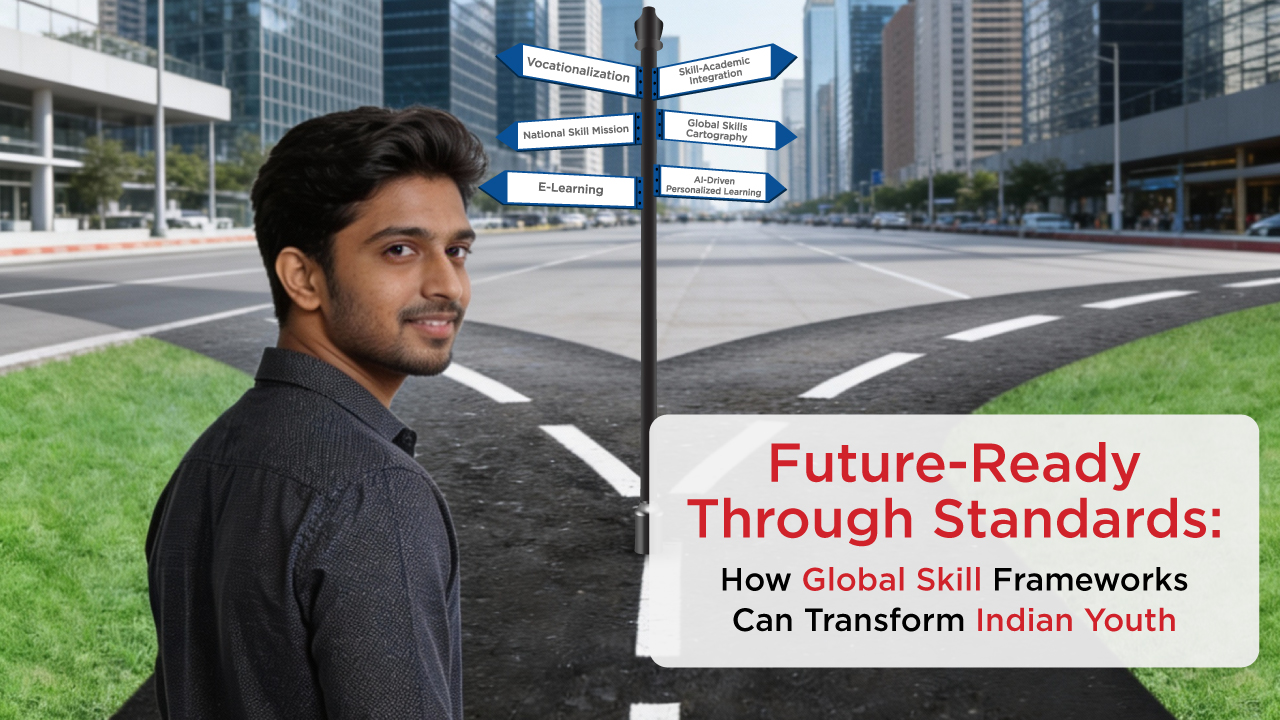
India is currently at an exciting crossroads. It has a large youth population and a growing workforce expanding by the day. The big question is: do our youth have the right, future-ready skills to seize the new opportunities emerging, not only in this country but across the world? As industries shift and automation replaces manual work, employers are seeking practical, standardised skills, not degrees. This is why training to clear standards is more important than ever to improve youth employability and sustain India's economic growth.
Global Demand for Standardised Skills in Youth Employability
National and international skills standards help keep things simple, making it easy for employers worldwide to identify strong talent. In today's world, recruiters consider candidates with a global outlook; therefore, standardising skills frameworks can be highly beneficial. It means everyone knows what someone is actually capable of doing, not necessarily what they have studied or where they went to school.
This clarity is particularly significant for the younger generation in India, as organisations worldwide move forward with skills-based recruitment. In engineering, manufacturing, design, IT, hospitality, and retail, employers are increasingly relying on well-known frameworks such as the National Skills Qualifications Framework (NSQF), the European Qualifications Framework (EQF), and global competency models. Job mobility, skill development, and employability are enhanced when Indian training aligns with such frameworks.
The actual strength of standards is that they bridge what you study and what the job actually requires. An excellent standard defines the work, abilities, and expertise you will need, and you will be prepared to work, capable of responding to change, and able to solve real issues. Standardisation is also beneficial because employers can hire the right individuals, and the government can develop policies that best suit the industry at present.
India’s Progress Towards Global Skill Standards and Future Opportunities
The ecosystem of skills training in India has advanced significantly over the last 10 years. Nevertheless, it needs to be more consistent with global skill standards and offer clearer pathways for international talent mobility to remain competitive. The importance of verified skills in international markets is rapidly growing among employers; however, the reliability of training quality remains vital, and standards-based certification can demonstrate it.
For young Indians considering working abroad or with global companies operating in India, international competence is essential. It allows applicants to compete on their abilities rather than their location. As the industry becomes more automated, adopts artificial intelligence, uses renewable energy, and relies on high-tech logistics, training aligned with industry standards gives youth in India a chance to be ready, not reactive.
Expanding Access to Global Education and Digital Learning Technologies
We should make it available at the international level to fully leverage India's demographic advantage. This means the government, industry, and educators must collaborate to ensure the courses, tests, and certificates received are, in fact, aligned with global expectations. People should also be provided with mechanisms to continuously learn and acquire new skills to keep abreast of evolving job roles.
Digital learning technologies have become key to scaling this access. Online courses, virtual laboratories, AI-driven learning technologies, MOOCs, and digital credentials enable students from diverse backgrounds to develop skills at their own pace. This set of tools is used to increase training accessibility, reinforce international awareness of Indian qualifications, and scale up future-ready skilling.
How VMI Collective India Transforms Youth Employability with Global Skills
VMI Collective India plays a strategic role in helping India shift toward globally aligned skill ecosystems. We assist organisations in mapping job roles against international standards, modernising training programs, and constructing competency-based frameworks that reflect the needs of global industries.
In addition to the alignment, VMI Collective India is working with industry leaders, policymakers, and educators to develop future-proof learning pathways. We offer advice on evaluation, certification, and validation, and ensure that skill assessments are conducted with integrity and credibility. The expansion of access to underserved populations, as well as the inclusion and affordability of world-class skilling, are also of concern to us.
Bridging the gap between what is taught in school and what is required in the workplace is helping build a new generation of Indian professionals. They will possess skills admired globally, feel confident, and be prepared to perform well in India or anywhere else.
| Key Insight | Explanation |
|---|---|
| Global Skill Standards Improve Employability | Standardised skill frameworks help employers clearly understand what a candidate can actually do. By aligning training with recognized national and international frameworks, young professionals can demonstrate verified competencies that are valued by employers worldwide. |
| Skills-Based Hiring Is Replacing Degree-Centric Recruitment | Employers are increasingly focusing on practical skills and competencies rather than relying solely on academic degrees. Global skill frameworks support this shift by defining clear capabilities required for specific job roles. |
| International Skill Alignment Enables Global Mobility | When Indian training programs align with global standards such as international competency frameworks, young professionals can compete more effectively for opportunities both within India and in global labour markets. |
| Digital Learning Expands Access to Future-Ready Skills | Technologies such as online courses, virtual labs, and digital certifications allow students from diverse backgrounds to gain industry-relevant skills. Digital platforms also help scale training programs and make quality education more accessible. |
| Collaborative Skill Ecosystems Strengthen Workforce Readiness | Effective skilling requires collaboration between government, industry, and education institutions. By working together to design standards-based training and certification systems, these stakeholders can build a workforce that is better prepared for future economic demands. |
FAQs
1. What are global skill frameworks, and why are they important?
Global skill frameworks are structured systems that define the competencies, knowledge, and abilities required for specific job roles. They standardise skill expectations across industries and countries, making it easier for employers to assess talent and for professionals to demonstrate their capabilities.
2. How do global skill standards benefit Indian youth?
Global skill standards help Indian youth compete in international job markets by ensuring their training aligns with widely recognised competencies. This improves employability, supports career mobility, and expands access to global employment opportunities.
3. How do skill frameworks support skills-based hiring?
Skill frameworks clearly define what professionals should be able to do in a particular role. This allows employers to evaluate candidates based on verified capabilities rather than relying on academic degrees or institutional reputation.
4. What role does technology play in global skill development?
Digital learning platforms, online courses, virtual labs, and digital credentials make skill development more accessible and scalable. Technology enables learners to continuously upgrade their capabilities as industries evolve.
5. How can India strengthen its alignment with global skill frameworks?
India can strengthen alignment by integrating international competency standards into training programs, improving certification quality, encouraging industry–academia collaboration, and promoting lifelong learning to help professionals adapt to changing global workforce demands.