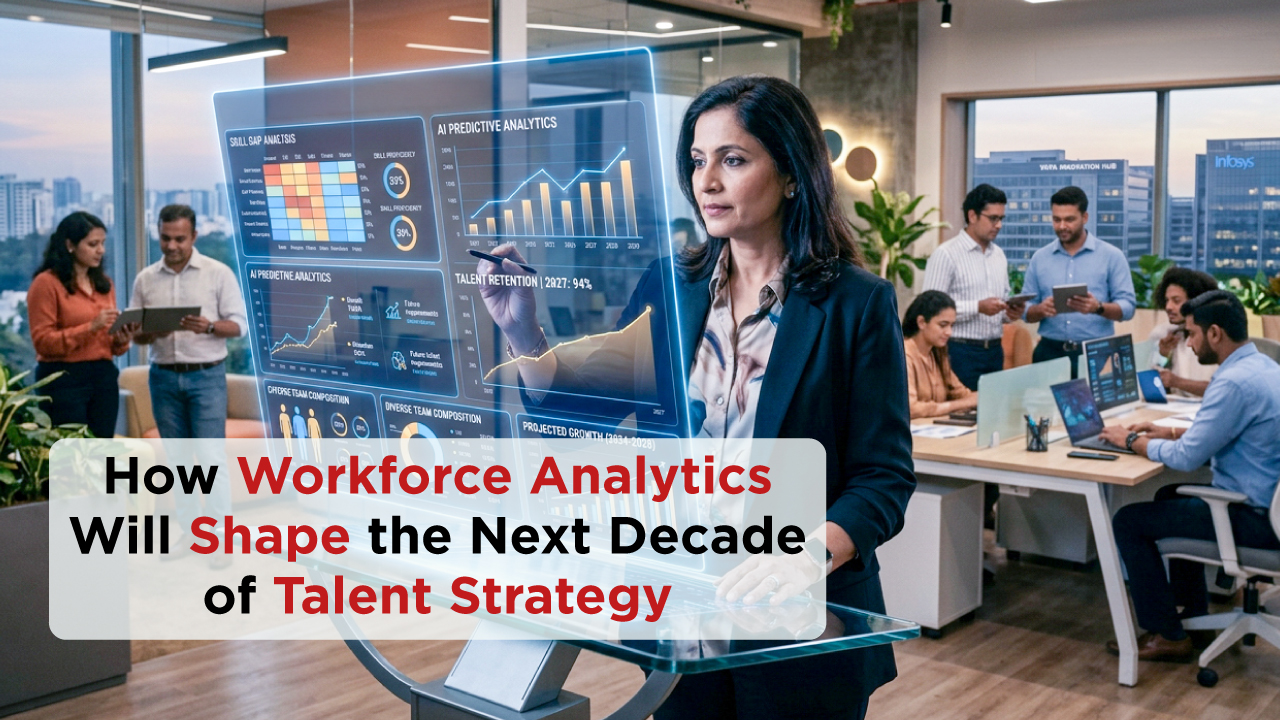
Traditionally, most organisations have relied on experience, instinct, and observation to make decisions about people. When a manager identifies potential in an employee, they are given more responsibility. When teams struggle to meet targets, additional resources are brought in. Promotions, hiring plans, and training programs have often been guided by conversation rather than structured insight.
For decades, this approach worked. The pace of change was slower, roles remained stable, and skills evolved gradually. Organisations could rely on human judgment to navigate workforce decisions. But the modern workplace is fundamentally different. Rapid technological shifts, evolving job roles, and the constant need for new capabilities have made intuition alone insufficient.
In this new reality, workforce analytics is redefining how organisations understand talent, capability, and future readiness.
Workforce Analytics for Skills Gap Analysis
Consider an organisation preparing to enter a new digital market. Previously, leadership might have expanded teams based on general expectations. Today, workforce analytics enables a far more precise understanding of capability. It identifies existing skills within the organisation, highlights gaps, and reveals employees who can transition into emerging roles with targeted development.
This shift allows organisations to anticipate talent needs instead of reacting to them. By analysing performance data, learning outcomes, project results, and workforce trends, companies gain visibility into patterns that were previously hidden. They can identify which skills are becoming critical, how roles are evolving, and where future capabilities must be built.
The result is a more proactive approach to workforce planning, where organisations design talent strategies aligned with long-term business direction.
Solving Employee Turnover with Analytics
Employee turnover has traditionally been explained through surface-level factors such as compensation or workload. However, workforce analytics often reveals deeper insights. A department experiencing high attrition may lack opportunities for growth, skill development, or career progression.
By uncovering these underlying patterns, organisations can address root causes rather than symptoms. This enables more meaningful interventions that improve retention, engagement, and overall workforce satisfaction.
Beyond solving immediate challenges, analytics transforms strategic thinking. Leaders begin to move from asking “How many people do we need?” to “What capabilities will define our organisation in the future?” This shift reshapes hiring strategies, learning investments, and internal mobility frameworks.
At a broader level, workforce analytics is influencing entire industries. Governments, policymakers, and educational institutions are using workforce data to understand skill trends and align education systems with future employment needs. Within this interconnected ecosystem, workforce analytics is becoming a critical intelligence layer shaping the future of work.
Unlocking the True Value of Workforce Analytics
Data alone does not create transformation. The true value of workforce analytics lies in interpretation and application. Organisations must translate insights into decisions that empower individuals, strengthen teams, and build sustainable talent ecosystems.
When applied effectively, analytics enables organisations to identify hidden talent, create equitable opportunities, and support meaningful career transitions. Growth is no longer defined by tenure or hierarchy, but by capability, adaptability, and continuous learning.
Employees benefit from greater transparency in how their skills are recognised and developed. Organisations benefit from a workforce that is aligned with evolving business needs. This creates a dynamic environment where both individuals and institutions grow together.
Over the next decade, organisations that adopt workforce analytics will gain a distinct advantage. They will better understand their talent landscape, respond faster to changing skill demands, and build strategies that align people development with long-term objectives.
Those that fail to adapt may struggle in an increasingly capability-driven economy.
How VMI Collective India Supports Workforce Analytics
In this evolving landscape, talent intelligence and skill-based systems are becoming essential. VMI Collective India plays a key role in enabling this transition by helping organisations build structured approaches to workforce capability analysis.
Through its focus on skills identification, competency mapping, and workforce readiness, VMI supports organisations in making talent development more measurable and transparent. Its approach ensures that workforce decisions are guided by insight rather than assumption.
By combining data with human understanding, VMI Collective India helps organisations gain a clearer view of capability, potential, and opportunity. This enables leaders to make more informed decisions while building resilient and future-ready teams.
As the future of work continues to evolve, organisations that integrate thoughtful leadership with workforce analytics will be better positioned to navigate change, develop talent, and create long-term value.