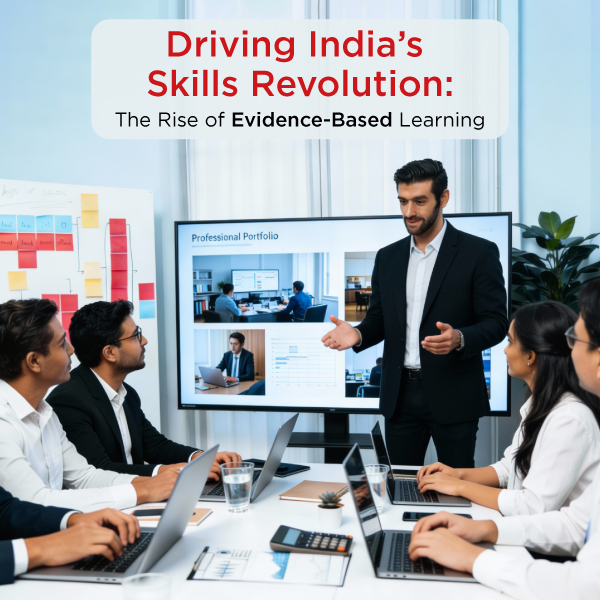
For many years, certificates, badges, and training records have been the primary means of demonstrating learning in India. These documents are used to reflect a learner’s effort and participation. However, as industries evolve and job roles become more complex, these credentials alone are insufficient. Employers now want clear, practical proof that candidates can actually do the work, not just that they finished a course or earned a certificate.
This change is happening because both employers and job seekers expect more. As new technologies and business models reshape the workplace, adaptability and proven skills are more important than ever. Indian companies recognize that traditional degrees have limits and are seeking candidates who can demonstrate real, hands-on skills. Students also want ways to demonstrate their capabilities and stand out in a competitive job market. Around the world, there is a trend toward judging people by what they can actually do, making evidence-based learning a key part of India’s skill economy.
Evidence-based learning is about demonstrating real results, such as completed projects, prototypes, simulations, or work tasks. This approach mirrors what happens in real jobs, where people solve problems, use tools, make decisions, and get things done. It helps both learners and employers check skills by looking at what someone can actually do, not just what they know in theory.
VMI Collective India is helping to spread this approach nationwide. They know that moving to evidence-based learning takes more than just new tools, so they focus on changing how educators, employers, and learners think. VMI offers training and ongoing support and helps build communities where people can learn from one another. By partnering with training centers, universities, and industry groups, VMI is helping India build a workforce ready for the future.