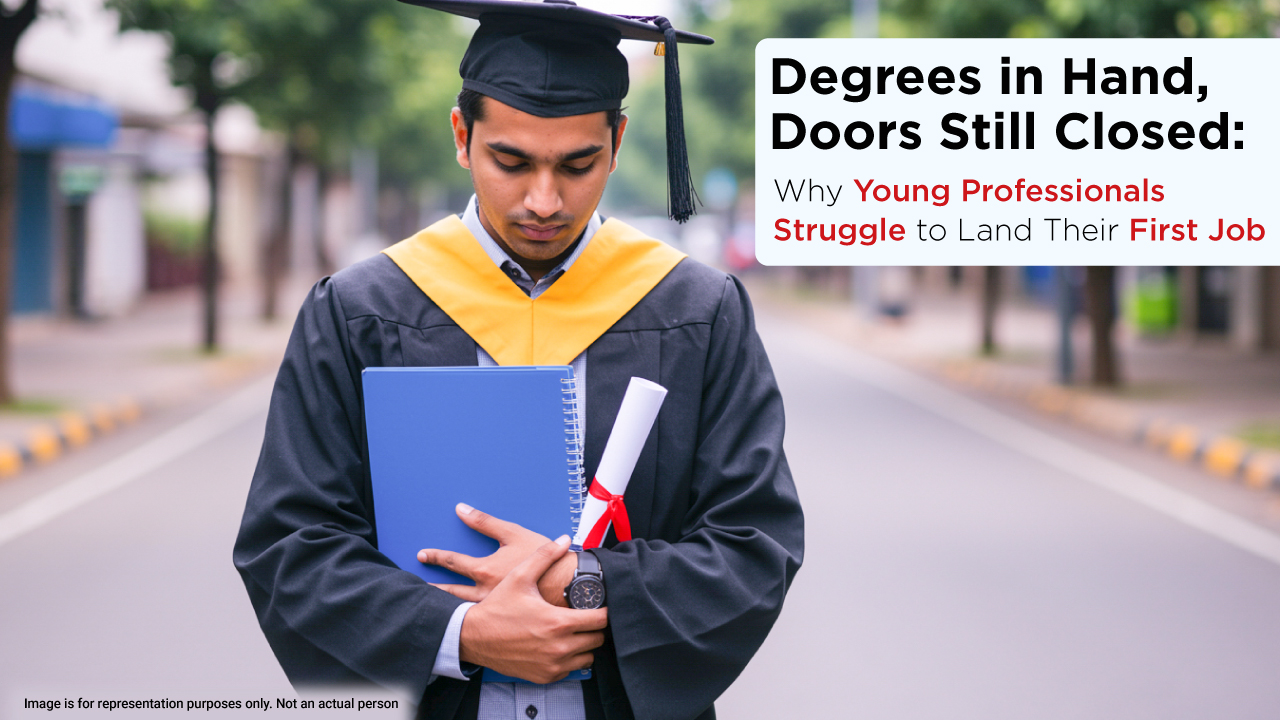
The graduate ceremony concluded with applause, photos, and proud, smiling faces. The degrees were taken in a serious, almost sacred, manner. This was a time when families believed they would become stable and successful. But weeks turned months, and inboxes remained silent. They submitted applications, attempted interviews, received rejections, or received no responses. A question slowly began to form in the minds of many young professionals with recognizable degrees: Why is this not working?
It is not the shortage of intelligence and effort. The disconnect between degrees offered and entry-level job requirements is expanding.
Why Employers Demand Job-Ready Skills at Entry Level
Degrees have long been the symbol of preparedness. They were regarded as evidence of discipline, knowledge, and potential. However, there is a silent shift in the world of work. Employers no longer hire solely on what candidates know, but on what they can do on the first day. Being an entry-level employee does not imply that you learn on the job as you used to. It commonly refers to being job-ready.
Most academic programs are structured around theory, formal examinations, and predictable outcomes. Actual workplaces, however, are unclean. They need to make decisions with partial information, work with different personalities, communicate with customers, and be adaptable. Young professionals may be unsure how to put the concepts into practice, even though they know them.
The Experience Trap: Why Entry-Level Jobs Require Experience
The other unspoken barrier is experience inflation. Entry-level jobs often require one to three years of experience. The internships are helpful, but most are brief, observational, or unpaid, and they do not provide the individual with any form of responsibility. Graduates are in a trap: they need experience to secure employment, and they need a job to acquire that experience.
Skills Mismatch: What Employers Really Want
There is also the skills mismatch. However, the degrees can remain overly content-based, whereas workplaces emphasize skills such as problem-solving, data interpretation, digital fluency, teamwork, and communication. A graduate might have the textbook definition of leadership or analytics, but would not be able to communicate insights clearly, readily accept feedback, or work effectively. Such loopholes are hardly evident on a resume sheet but become apparent during interviews and evaluations.
Confidence also plays a role. The vast majority of young professionals are socialized to wait for instructions, work according to rubrics, and seek the right answers. Ambiguity prevails at the workplace. Employers seek individuals who are eager, inquisitive, and outgoing- qualities that are not necessarily taught in the conventional education systems. Those who are indecisive, second-guess themselves, or are unable to explain their values miss opportunities.
The Emotional Impact of Job Rejection on Graduates
It also has a more emotional dimension. A constant loss makes one doubt oneself. Graduates may begin to internalize failure and believe that the degree itself was a mistake or that they are personally inferior. This emotional cost is rarely discussed, but it influences performance, learning, and motivation.
The fact is upsetting yet significant: degrees no longer suffice. They are principles rather than promises. The contemporary labor market is sensitive to demonstrations of skills to be put into practice in real-world situations, the capacity to learn continually, and a willingness to serve, not merely to follow.
This does not imply that the degrees are worthless. It is that their place has changed. They open the doors to education, but entering employment now requires additional bridges: practical exposure, mentorship, industry context, and mindset changes.
The VMI Collective India Role
In this regard, VMI Collective India has been instrumental in transforming the relationship between education and employment. VMI Collective India is majoring in what degree programs fail to complete: practical preparation. Its programs have an application-driven design. Students solve work-related challenges, learn to make decisions, express themselves, and gain confidence by acting rather than reading.
Moreover, VMI Collective India assists young professionals in redefining themselves. They begin to consider themselves providers with developing skills rather than freshers seeking an opportunity. Learners learn to demonstrate their value in authentic and adaptive ways through mentorship, guided practice, and exposure to workplace expectations.
VMI Collective India assists graduates in entering entry-level positions with clarity and confidence by bridging the gap between academic learning and practical capabilities and human skills. In a career world that requires more than a degree, it offers what young professionals need most: not a shortcut, but guidance, preparation, and faith in themselves.
| Key Insights | Explanation |
|---|---|
| A Degree Is No Longer a Guaranteed Path to Employment | While degrees still provide foundational knowledge and credibility, employers increasingly expect candidates to demonstrate practical abilities and workplace readiness beyond academic qualifications. |
| Employers Prioritize Job-Ready Skills Over Theoretical Knowledge | Organizations look for candidates who can solve problems, communicate effectively, collaborate with teams, and adapt quickly to real-world challenges from day one. |
| The Experience Gap Creates a Barrier for Fresh Graduates | Many entry-level roles require prior experience, placing graduates in a difficult position where they must gain experience before securing their first professional opportunity. |
| Human Skills and Confidence Influence Hiring Decisions | Communication, initiative, adaptability, and the ability to explain ideas clearly often determine whether candidates succeed in interviews and workplace evaluations. |
| Bridging Education and Employment Requires Practical Learning | Programs that combine mentorship, real-world projects, and industry exposure help graduates translate academic learning into employable skills and professional confidence. |
FAQs
1. Why do many graduates struggle to find their first job after completing a degree?
Many graduates face difficulties because employers increasingly look for practical skills and workplace readiness, not just academic knowledge. While degrees provide foundational knowledge, companies expect candidates to demonstrate problem-solving skills, communication skills, and adaptability in real-world situations.
2. Why do entry-level jobs often require prior experience?
Employers prefer candidates who can contribute quickly with minimal training. Many organizations seek applicants with internships, project experience, or workplace exposure, even for entry-level roles.
3. What skills are employers most interested in when hiring young professionals?
Employers typically look for skills such as critical thinking, communication, teamwork, digital literacy, problem-solving, and the ability to learn quickly. These skills help graduates apply academic knowledge effectively in professional settings.
4. How can graduates improve their chances of getting hired?
Graduates can improve their employability by gaining practical experience through internships, industry projects, mentorship programs, and skill-based learning opportunities. Developing confidence, communication abilities, and real-world problem-solving skills also makes candidates more competitive.
5. How does VMI Collective India help graduates transition into employment?
VMI Collective India focuses on bridging the gap between academic learning and industry expectations. Through application-driven programs, mentorship, and exposure to real workplace challenges, it helps young professionals develop the skills, confidence, and mindset to succeed in their first jobs.