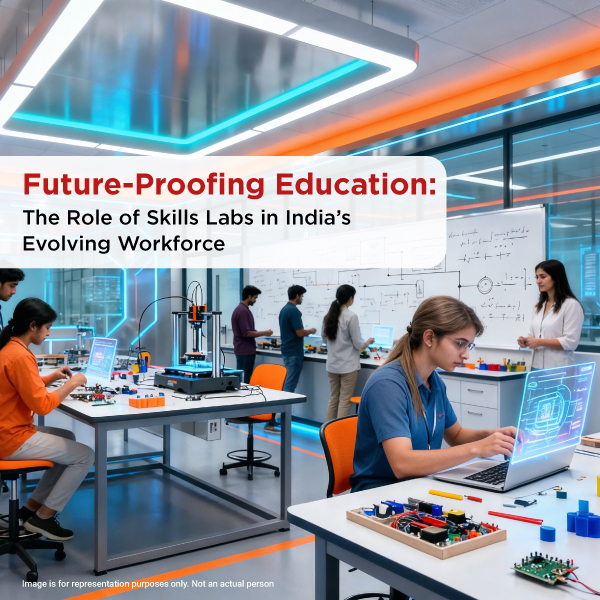
Every day in India, thousands of students enter university classrooms with their notebooks, laptops, and dreams shaped by years of schooling. Most institutions still rely on lectures and place a heavy emphasis on grades. Meanwhile, the professional world outside is changing faster than ever. New technologies, digital shifts, and evolving business models are redefining what it means to be employable, and they require skills that many classrooms do not yet teach.
Today’s industries want graduates who can use what they’ve learned to create new solutions. Employers look for people who can think critically, work well with others, and adapt to new situations, not just those who remember facts or theories. As this change accelerates, the gap between what universities teach and what jobs need keeps widening. Now, the key question is not only what students know, but how well they can use their knowledge in real situations and make a real impact.
To bridge this gap, universities should become places where students learn by doing and solving real problems. Imagine classrooms that feel like studios, where students work on real challenges from businesses and communities rather than just preparing for exams. Marketing students could design campaigns for local companies, technology students might build solutions to real needs, and policy students could develop practical answers to social issues. This hands-on learning makes education more meaningful and helps students build confidence, resilience, and flexibility for their future careers.
VMI Collective India is leading this change in education. By building partnerships between universities and industry, VMI helps students go beyond passive learning and take part in real, hands-on experiences. Through its creative programs, the organization supports projects that cross different fields, helps students build practical skills, and encourages systems that value real results and proven abilities. VMI is helping shape a future in which Indian graduates have both the knowledge and practical skills they need to succeed and lead in the global workforce.
Learn More: How universities are transforming into skills-based learning environments